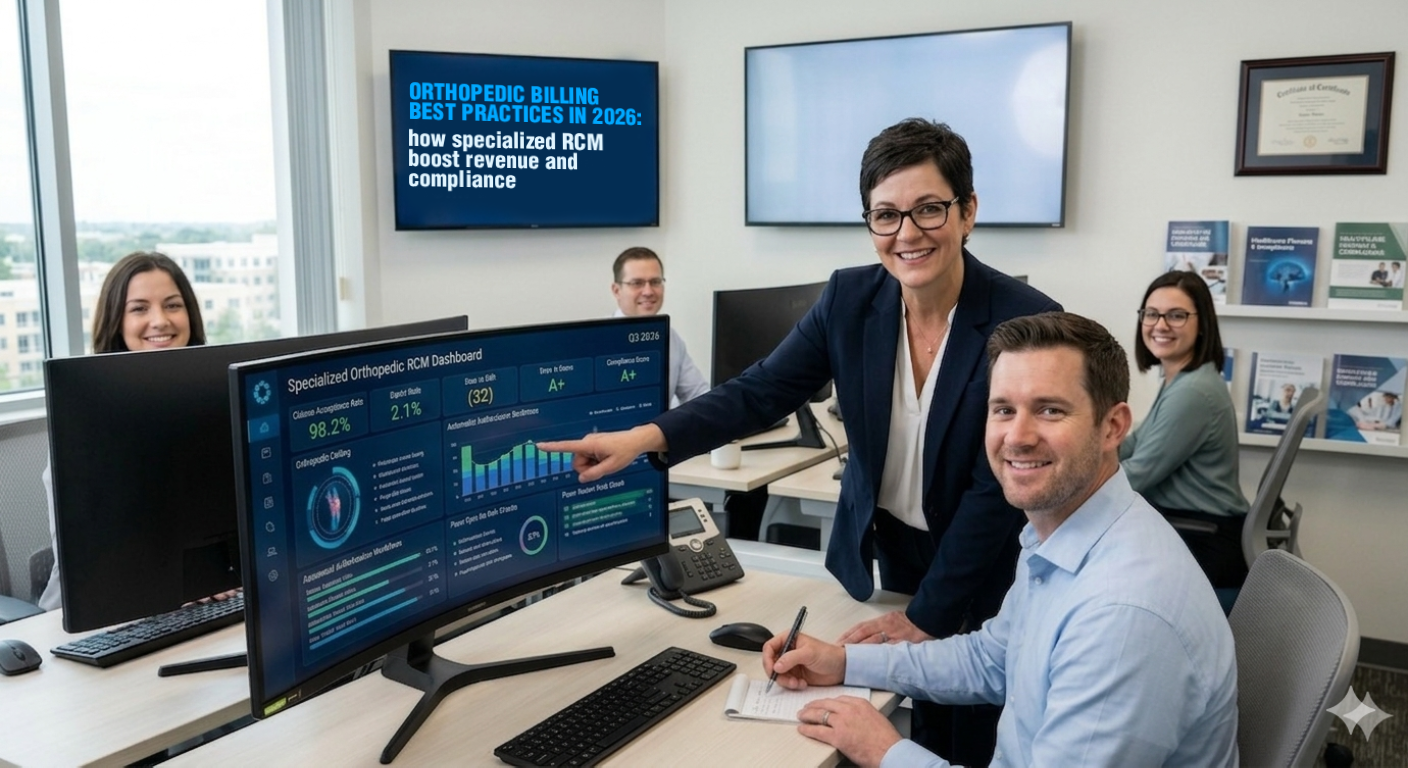

Orthopedic billing best practices in 2026: how specialized RCM boost revenue and compliance
Orthopedic practices deal with high-value procedures, complicated coding and strict rules from payers. Billing accuracy and compliance are no longer optional in 2026, they have a direct effect on revenue and practice growth. Following best practices for orthopedic billing and using specialized revenue cycle management (RCM) can help practices get more money and fewer denials.
Why orthopedic billing needs special RCM
- Billing for orthopedics includes complicated surgeries, care after surgery and follow-up procedures.
- To avoid problems with payment, global periods and modifiers must be used correctly.
- To prove medical necessity and avoid denials, detailed paperwork is very important.
- General billing teams might miss important information, which could lead to underpayments or claims being denied.
- Specialized orthopedic RCM teams learn how to code procedures and follow payer rules.
- They make sure that all rules are followed and that claims are correct from the time they are submitted to the time they are paid.
5 best ways to bill for orthopedic services in 2026
1. Check insurance and authorization early
Before any procedures, make sure the patient is eligible and has already received permission. Early verification cuts down on claim denials and payment delays.
2. Use coding that is accurate and up-to-date.
Joint replacement, sports injuries, trauma care and spine procedures are all examples of orthopedic services that need detailed coding. Correct modifiers and laterality make it easier to get paid.
3. Quick send in clean claims
Submitting clean claims within 24 to 48 hours increases the chances of them being accepted on the first try and speeds up payments.
4. Check claims and denials every week
Keep an eye on claims from when they are filed to when they are paid. Quick follow-up on denials help you get your money back and avoid write-offs.
5. Keep up with compliance by doing regular audits
Monthly audits make sure that you follow CMS and payer rules, which lowers the risk of audits and penalties.
6. Use our specialized staff to improve your RCM experience
Our trained orthopedic biller and RCM experts make sure that complex claims are handled correctly, that denials are kept to a minimum and that repayments are made faster. Your practices can focus on taking care of patients while we make your revenue cycle management easier by working with us.
5 Key benefits of specialized orthopedic RCM
Beyond basic billing, specialized orthopedic RCM simplifies the revenue cycle, lowers errors, and maximizes revenue. This is a comprehensive guide:
1. Make use of procedure-specific knowledge:
Detailed CPT and ICD-10 coding is necessary for orthopedic procedures such as joint replacements, spine surgeries, trauma care and sports injury treatments.
Specialized RCM teams are aware of the billing rules and modifiers that apply to each procedure.
Reduce mistakes that result in underpayments or claim denials.
2. Optimize revenue capture
Finds undercoded procedures, missed charges and repayment gaps. Keep an eye on billing trends to make sure all rendered services are accurately billed.
Increase cash flow by optimizing first-pass claim acceptance rates.
3. Guarantee compliance to regulations
Keeps your practice up-to-date on telehealth, private payer, Medicare and Medicaid regulations.
Lowers the possibility of fines, penalties and audits.
Verifies that each filed claim satisfies payer requirements.
4. Simplify workflow and documentation
Arranges patient charts, imaging reports, procedure documentation and operative notes.
Ensures accurate documentation of post-operative care and pre-authorizations. Cuts down on time spent on repetitive follow-ups and administrative duties.
How specialized RCM helps with compliance and making more money
A specialized orthopedic RCM service makes every part of the billing cycle better by;
- Cutting down on claim denials and having to do the work again.
- Making the time it take to get paid better.
- Making sure that rules are followed as they change.
- Giving clear information and reports on finances.
With help from an RCM expert, orthopedic practices can keep their cash flow steady and stay in line with payer rules.