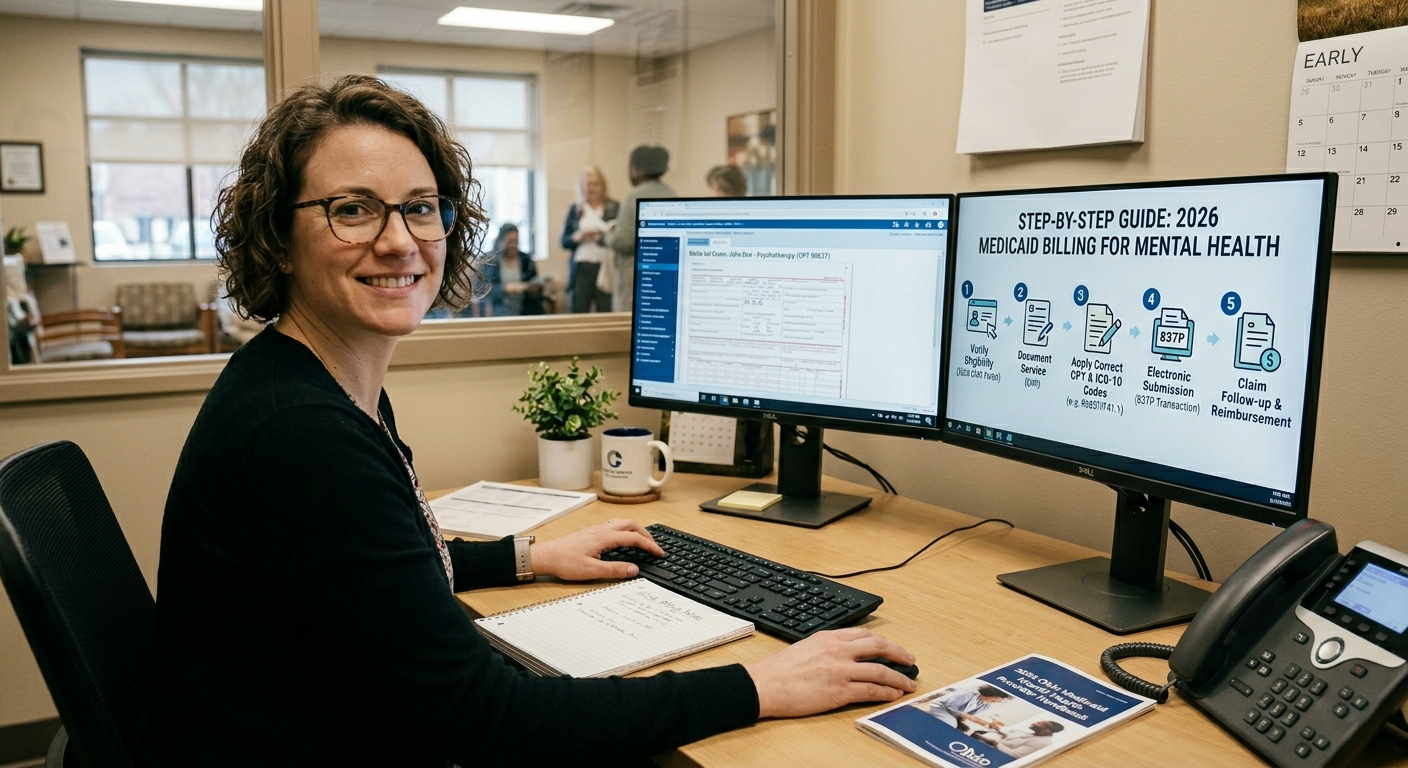

How to bill Medicaid for mental health billing services in 2026: a step-by-step guide
Mental health billing has become more complicated than ever now that new Medicaid rules are coming out in 2026. Even small mistakes on bills cause claim denials, delayed payments, and lost income.
Key Medicaid billing guidelines that providers must follow:
- Accurate documentation that fully supports the service provided.
- Correct CPT and ICD-10 codes aligned with medicaid guidelines.
- Complete patient information to avoid processing delays.
- Up-to-date policy compliance with 2026 Medicaid billing guidelines.
Following these mental health billing guidelines can help you get more claims approved, make the process easier, and keep your cash flow steady. Providers can focus on taking care of patients instead of worrying about payment problems when guidelines are followed correctly.
6 Steps to follow for Medicaid mental health billing
1. Check to see if you can get Medicaid
- Before each visit, check the patient’s Medicaid ID, coverage dates, and services that are covered.
- Check to see if the patient is a member of a Medicaid managed care organisation (MCO) so that claims can be sent to the right place.
- Changes to your Medicaid coverage can happen because of renewal, income updates, or plan changes.
2. Check that the provider is enrolled
- Make sure that all of the providers, therapists, and clinics are actively enrolled with Medicaid and the right MCOs.
- Check that your license, NPIs, office address, and tax IDs are all up-to-date.
- Providers who are not signed up or have wrong information could have their claims denied or payments delayed.
3. Get approval ahead of time
- You need to get permissions first for some services, likely therapy sessions, inpatient care, or specialized psychiatric treatments.
- Send in clinical paperwork that includes the diagnosis, treatment plan, and length of care.
- Keep an eye on authorizations and renew them before they run out.
4. Keep accurate records of your services
- Keep every record accurately and write down everything that happens with each patient, including their diagnosis, treatment plan, session note, time spent, and provider credentials.
- Proper documentation shows that services are medically necessary and keeps providers safe during audits.
5. Send in Medicaid claims
- Check the patient’s information, the provider’s enrollment, and the correct CPT and ICD-10 codes.
- Use state portals, clearinghouses, and practice management software to send claims electronically.
- Please review all the information once more to ensure there are no mistakes or delays.
6. Keep track of claims and fix denials.
- Check the status of your claims often to find problems early.
- Carefully review the reasons for the denials, correct any mistakes, and resubmit the claims properly.
- Medicaid has strict deadlines for filing claims. If you miss one, you may never get paid.
Hiring a dedicated mental health biller makes sure that claims are filed correctly.
Common Mental health billing mistakes to avoid
A lot of mental health providers make simple but a lot of mistakes when they bill Medicaid. Claims are most often denied because they use old CTP or ICD-10, don’t have a provider's signature in clinical notes, are turned in late, or do not check if the patient is eligible.
Payments can also be delayed if the paperwork is not complete and doesn’t show medical necessity, or if claims aren’t tracked right away. Handling billing without help from a professional and skipping internal audits makes mistakes and compliance risks even worse.
Advantage of working with Medicaid mental health billing
Many mental health providers choose to work with Medicaid mental health billing services to cut down on mistakes, speed up cash flow, and save time. It can be hard for their teams to keep up with compliance requirements because Medicaid billing rules can be complicated and change often.
Professional medical billing companies send in clean claims, keep track of payments, and make fewer denials. This ensures timely payment to providers. Medical billing professionals often lower the number of claims they are denied and use the correct code without any mistakes, check eligibility, and follow Medicaid rules very closely.
Wrap
In conclusion, providers can get more approved, get paid faster, and focus on patient care by following these seven rules and avoiding common mistakes. Professional billers help, make sure that everything is done right and that the money stays stable in 2026
Want to make your Medicaid mental health billing easier in 2026? Hire our Medical billers to handle the claims.